LPED Irrigation

LPED Irrigation

LAS Systems

In New Zealand LPED (Low Pressure Effluent Distribution) is the most robust irrigation method for applying treated wastewater to land.

It’s why at WaterFlow we don’t just focus solely on the treatment system like others do. We consider your vision for your property first and then find the LAS that will achieve this and finally the wastewater treatment system that will match and meet your needs.

Your LAS or ‘Disposal Field’ has the largest ‘footprint’ of all of the components and is the ‘subject’ of most Council regulations, involving ‘setback’ distances from features like buildings, waterways, flowpaths, stormwater drains, ponds/dams, bores, ground water/water tables, flood zones, boundaries etc… There is also requirements around steepness of slopes to consider which can have a bearing on which LAS you can get consented, on your site, such as irrigation type fields verses soakage type fields.

The Waterflow Team is well versed in all those constraints and options and very passionate about helping you design the ultimate LAS for your property.


LPED Irrigation The most robust irrigation system for discharging wastewater is the Low-Pressure Effluent Distribution (LPED) irrigation.

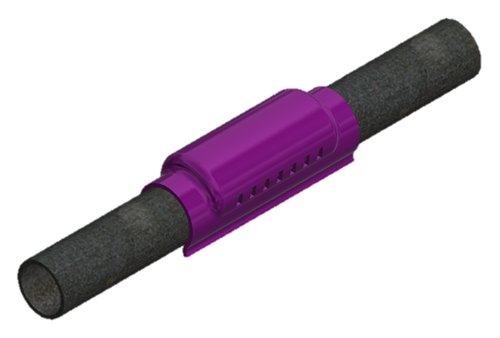
This is a favourite of ours, as it is the most robust irrigation system available. Using larger 25mm distribution laterals with drilled holes, it is much less prone to blockage and crushing. These larger orifices are covered with a unique and innovative ‘squirt guard’ designed and developed by Waterflow. These systems do require a rectangular area and must run level with the contour, which can limit options of where they can be placed onsite.

  • Lines of equal length are laid 1-1.5m apart (spacing is dependent on council regulations) on a level contour and they can either be covered with mulch or buried in the topsoil.
  • The laterals are fed from a manifold at the head of the field, ensuring an even distribution across the field.
  • At the end of the laterals are flush taps, that allow the flushing out of any contaminants that might build up over time.
  • The size and number of the holes is calculated by our design technicians for each project. Innovative squirt guards developed here at WaterFlow, clip over each hole to spread the effluent.
  • Larger laterals and orifice sizes mean robustness and less prone to blockages.

LPED Field Calculator

LPED Tools & Information

LPED Calculator

This results from this calculator are a recommendation and should be confirmed with a Waterflow design technician.

faq arrow
Squirt Guard Specification

Waterflow Wastewater Treatment Systems frequently use Low Pressure Effluent Dispersal (LPED) irrigation. This dripline requires squirt guards to prevent spraying in the disposal area.

Traditional squirt guards are cut from 65mm drain coil. These are cut into 300mm long ‘squirt guards’ which are threaded over the pipe and pinned over the holes in the LPED system. In subsurface situations, either 600mm long or full length drain coil sections have been used; this prevents the holes clogging with soil and is intended to spread the distribution. Threading sections onto the dripline is time consuming, and full-length sub surface drain coil has caused unequal distribution resulting in ponding and breakout.

The new generation of squirt guard is now available. The Natural Flow squirt guards are a smart clip-on system, allowing the lines to be pinned, drilled and then squirt guard fitted; in that order. We have found this process to be faster and more efficient than the traditional way. This new method also allows the installer to ensure all holes are drilled on the top of the line, which improves the distribution across the field. 

faq arrow
WaterFlow NZ Ltd.

Home

Call WaterFlow NZ Ltd.

Call Us

Get a free site assessment

Free Site Assessment